News
2026 Employee Benefits Trends: Should You Cover GLP‑1s for Weight Loss?
Mar 10, 2026

GLP‑1 (glucagon‑like peptide‑1) therapies that were originally developed to treat Type 2 diabetes, have moved into mainstream conversations about the positive affect GLP-1s have had on weight management.
Nearly 12 percent of Americans have used a GLP‑1 medication for a variety of reasons, but with awareness increasing, the utilization is rising rapidly.
This level of demand means benefit managers can no longer treat GLP‑1 coverage as a niche policy question. As Taylor Oswald’s Tara Zick, VP, Benefits Practice Leader, notes:
“The acceleration in GLP-1 utilization has been extraordinary. What began as a targeted therapy for diabetes has rapidly evolved into a mainstream weight management solution, fueled by rising awareness, direct-to-consumer marketing, and strong clinical outcomes. As demand expands, we’re also seeing growing potential for off-label use—underscoring the need for thoughtful clinical oversight, clear coverage policies, and a balanced approach to cost management.”
Understanding the Coverage Landscape
As GLP-1 medications have demonstrated meaningful weight loss outcomes, their use beyond diabetes treatment has grown significantly. While this expanded, off-label use reflects the clinical effectiveness of these drugs for weight management, it also highlights the importance of appropriate patient selection and medical oversight.
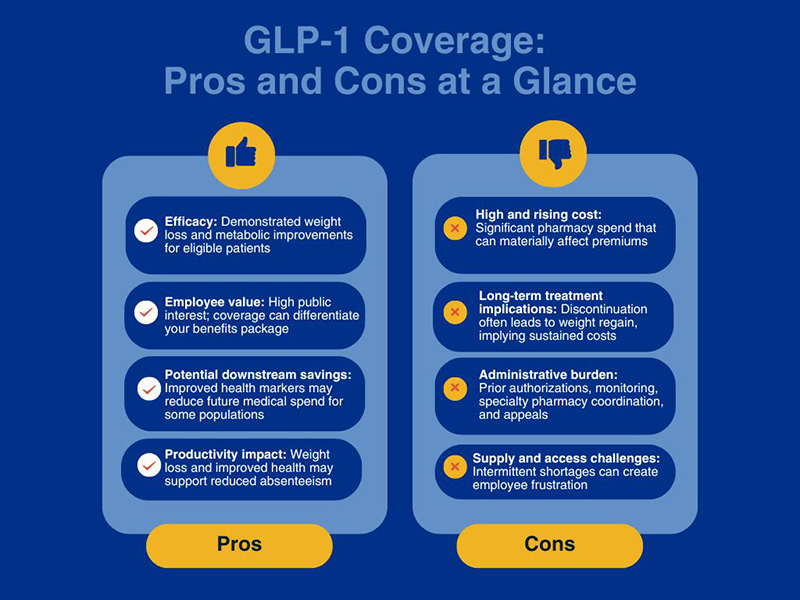
Covering these therapies can deliver meaningful clinical benefits and serve as a competitive employee offering — but it also introduces significant pharmacy spend and administrative complexity.
“Expect your overall fully insured premiums to increase at an average, 7–9% if you expand GLP‑1 availability for weight loss,” adds Zick.
A Strategic Decision — Not a Simple Yes or No
Employers must balance clinical effectiveness, cost sustainability, and operational feasibility. Taylor Oswald finds that:
Your Taylor Oswald insurance advisor can help you design and implementation checklist that includes:
You don’t have to make this decision in a vacuum. Work with your Taylor Oswald advisor to:
Bottom Line
“GLP-1 medications can meaningfully improve an individual’s health outcomes, particularly in cases involving obesity and related comorbidities,” Zick noted. “However, those benefits come at a significant financial cost, with annual treatment expenses typically ranging from $12,000 to $16,000 per patient.”
GLP‑1 coverage is one of the most consequential benefit decisions employers will face
in 2026. With the right modeling, governance, and clinical supports, it can be a high‑value offering — but it requires careful planning.
Your Taylor Oswald advisor is ready to help you evaluate your options and design a strategy that aligns with your organization’s goals.
Source: RAND.org