News
2026 TRENDS IN EMPLOYEE BENEFITS: WHY AFFORDABILITY MUST COME FIRST
Feb 19, 2026

Affordability isn’t just a cultural buzzword — it’s the defining challenge shaping employer benefit strategies heading into 2027. As organizations reflect on their 2026 medical plan renewals, many are confronting a difficult reality: costs are rising faster than expected, and employees are feeling the strain.
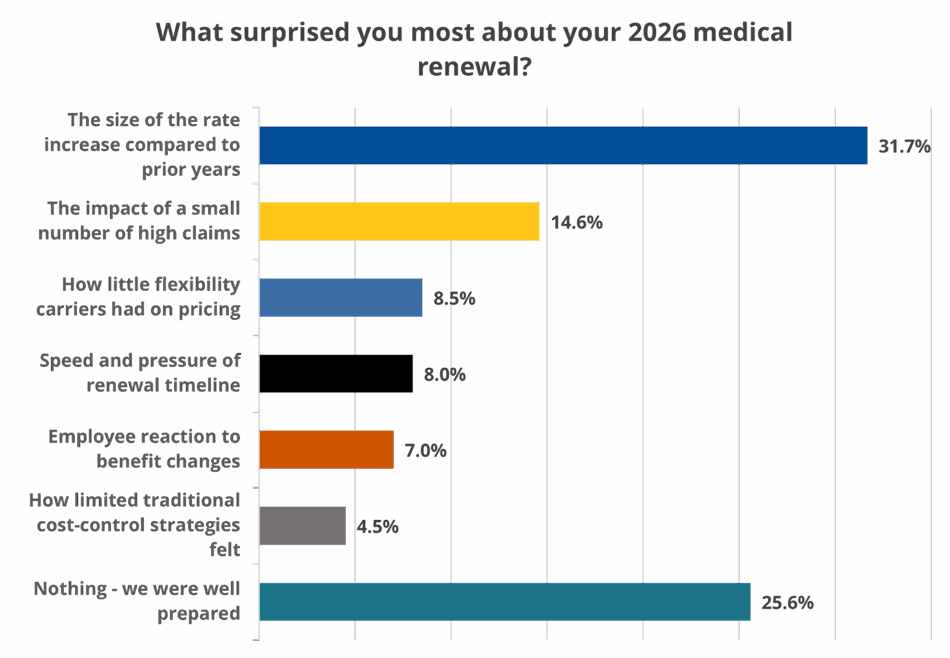
A recent Assurex Global survey underscores the trend. Nearly one‑third of respondents said the biggest surprise of the 2026 renewal cycle was the size of the rate increase compared to prior years, with more than half experiencing increases of 7% or higher.
“Many employers are feeling the strain of inflation and finding that their planned budgets no longer align with what they hoped to offer employees,” says Taylor Oswald’s Tara Zick, VP, Benefits Practice Leader. “It’s a challenging moment for everyone, and the industry is experiencing a clear mismatch between expectations and today’s realities.”
How Employers Responded to Rising Costs
To manage these increases, organizations most commonly turned to:
Yet even as employers work to contain costs, they remain acutely aware of the financial pressure on their workforce. Nearly 75% believe employees are facing greater healthcare affordability challenges, and 66% cite employee affordability as the top barrier to making further plan changes.
The Most Concerning Insight: Many Don’t Know What’s Driving Costs
When asked to identify the primary driver of medical plan increases, 28% of survey respondents said they were unsure.
That uncertainty is a risk in itself. Without a clear understanding of what’s driving increases, employers can’t budget accurately, evaluate plan performance, or make informed decisions.
Don’t Wait for 2027: Start Managing Your Plan Now
Proactive plan management is the most effective way to regain control of rising costs. Your Taylor Oswald team uses data, financial modeling, and strategic planning to get ahead of next year’s renewal cycle. Key steps include:
These actions give employers the visibility they need to make informed decisions — not reactive ones.
Navigate the Headwinds with Expert Guidance
Medical plan trends are being shaped by a complex mix of factors: increased utilization, price inflation, high‑cost specialty drugs, gene therapies, tariffs, and a general decline in population health.
You don’t have to navigate these challenges alone. Partner with your Taylor Oswald advisor to build a strategy that balances affordability, competitiveness, and long‑term sustainability.